Cybersecurity is no longer optional for small and mid-sized businesses in 2026.
With increasing ransomware attacks, phishing scams, and data breaches, SMBs are now one of the biggest targets for cybercriminals.
The cost of a single breach can include financial loss, downtime, legal issues, and long-term reputation damage.
That’s why many businesses rely on providers like IT Ninjas to implement proactive cybersecurity and managed protection systems.
Quick Answer: What Is SMB Cybersecurity?
- Protection of business systems, data, and networks from cyber threats
- Includes firewalls, antivirus, monitoring, and encryption
- Prevents ransomware, phishing, and data breaches
- Ensures business continuity and compliance
- Critical for all modern SMB operations in 2026
What Is Cybersecurity for SMBs?
Cybersecurity for SMBs refers to the practices, tools, and strategies used to protect small and medium businesses from digital threats.
It includes safeguarding:
- Business networks
- Customer data
- Cloud systems
- Employee devices
- Internal applications
Also known as business IT security, it focuses on preventing unauthorized access, attacks, and data loss.
Why Cybersecurity Matters in 2026
Cyber threats have evolved significantly due to:
- AI-powered hacking tools
- Increased remote work exposure
- Cloud system vulnerabilities
- Phishing attacks targeting employees
- Rising ransomware-as-a-service models
SMBs are now targeted because they often lack advanced security systems.
Key Cybersecurity Threats in 2026
1. Ransomware Attacks
Hackers encrypt business data and demand payment.
2. Phishing Emails
Fake emails trick employees into revealing credentials.
3. Data Breaches
Unauthorized access to sensitive business information.
4. Insider Threats
Employees accidentally or intentionally exposing data.
5. Cloud Vulnerabilities
Misconfigured cloud systems leading to data leaks.
Key Cybersecurity Measures
1. Firewalls
Block unauthorized network access.
2. Endpoint Protection
Secures laptops, desktops, and mobile devices.
3. Multi-Factor Authentication (MFA)
Adds extra login security layers.
4. Data Encryption
Protects sensitive information during transfer and storage.
5. Regular Backups
Ensures quick recovery after attacks or failures.
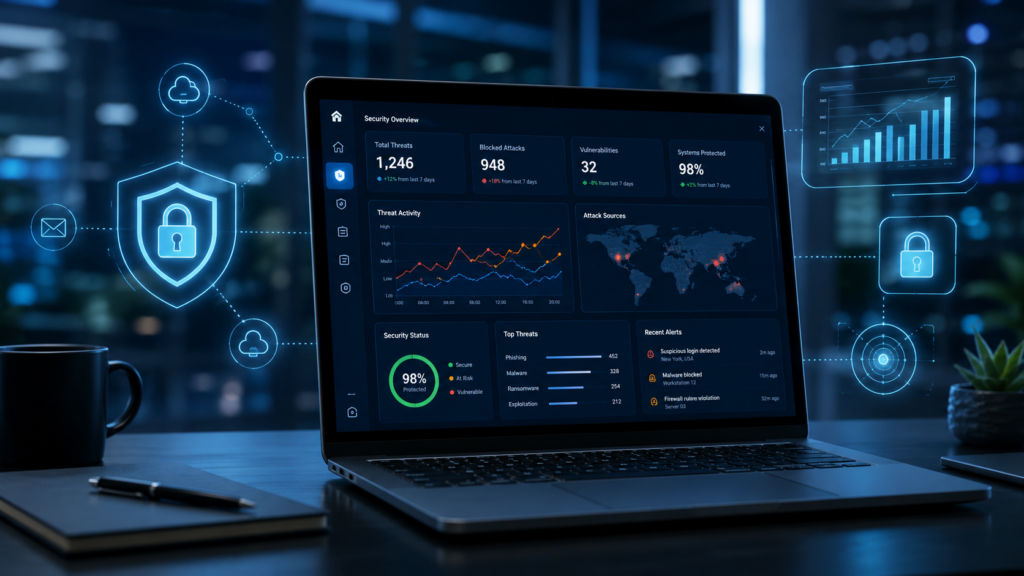
How Cybersecurity Works
A strong cybersecurity system operates through:
- Continuous monitoring of networks
- Real-time threat detection
- Automated response to suspicious activity
- Regular system updates and patching
- Employee security awareness training
Risks of Poor Cybersecurity
Businesses without proper protection face:
- Financial losses from ransomware attacks
- Customer data theft
- Regulatory penalties
- System downtime
- Reputation damage
Even one weak entry point can compromise the entire system.
Managed Cybersecurity Advantage
Managed security services provide:
- 24/7 threat monitoring
- Advanced intrusion detection systems
- Real-time response to attacks
- Security audits and compliance support
- Expert cybersecurity teams
This proactive model is far more effective than reactive internal IT security.
MSP Security Framework
Providers like IT Ninjas typically follow:
- Risk assessment and vulnerability scan
- Security infrastructure setup
- Continuous monitoring and alerts
- Threat response and mitigation
- Ongoing optimization and reporting
Industry Use Cases
- Healthcare – patient data protection and HIPAA compliance
- Finance – fraud detection and secure transactions
- Legal – confidential document security
- Retail – payment system protection
- SaaS companies – cloud security
- Manufacturing – operational system protection
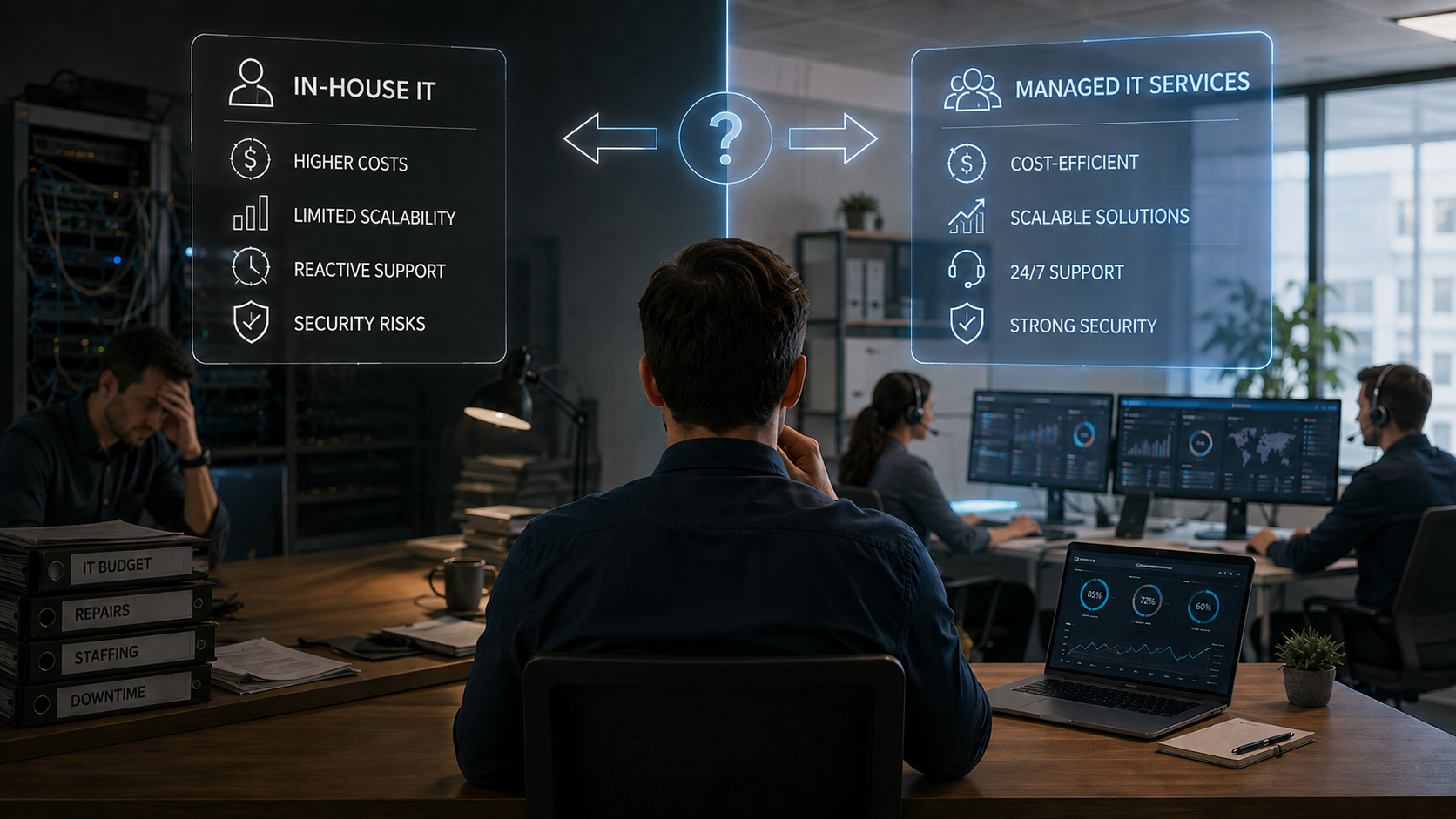
Cybersecurity Cost vs Risk
Investing in cybersecurity is far cheaper than recovering from an attack:
Without Security:
- Data breach recovery costs
- Business downtime losses
- Legal penalties
- Reputation damage
With Managed Security:
- Predictable monthly cost
- Continuous protection
- Faster threat response
- Lower long-term risk
Frequently Asked Questions
It is the protection of small business systems, networks, and data from cyber threats.
Because cyberattacks are more advanced and frequent than ever before.
Yes, managed security services make it affordable and scalable.
Ransomware and phishing attacks remain the most common threats.
Conclusion
Cybersecurity in 2026 is essential for every SMB that relies on digital systems, cloud tools, and online communication.
Without proper protection, businesses risk financial loss, downtime, and data breaches.
Partnering with IT Ninjas ensures proactive cybersecurity, continuous monitoring, and strong defense against modern threats.