In 2026, businesses are no longer choosing between cloud and on-premise systems, they are combining both.
This approach is called hybrid cloud, and it has become one of the most strategic IT models for modern SMBs.
Hybrid cloud allows businesses to balance security, flexibility, and cost efficiency while keeping control over critical data.
However, designing and managing a hybrid environment requires expertise, which is why companies often work with providers like IT Ninjas.
Quick Answer: What Is Hybrid Cloud?
- Combination of private (on-premise) and public cloud infrastructure
- Allows workload distribution across multiple environments
- Improves security, flexibility, and performance
- Supports both legacy systems and modern applications
- Ideal for businesses with compliance or scalability needs
What Is Hybrid Cloud?
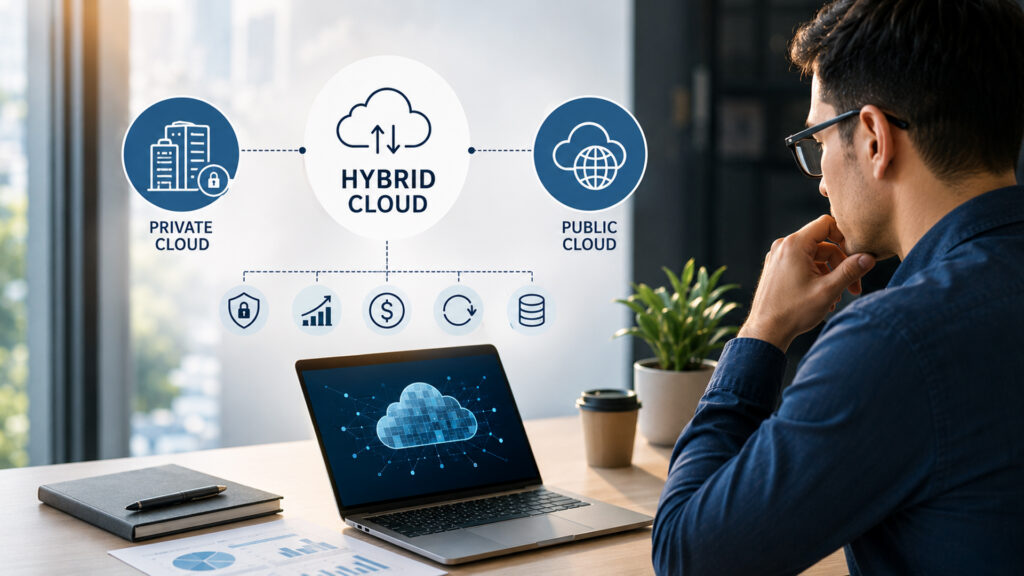
Hybrid cloud is a computing model that integrates:
- Private infrastructure (on-premise servers or dedicated systems)
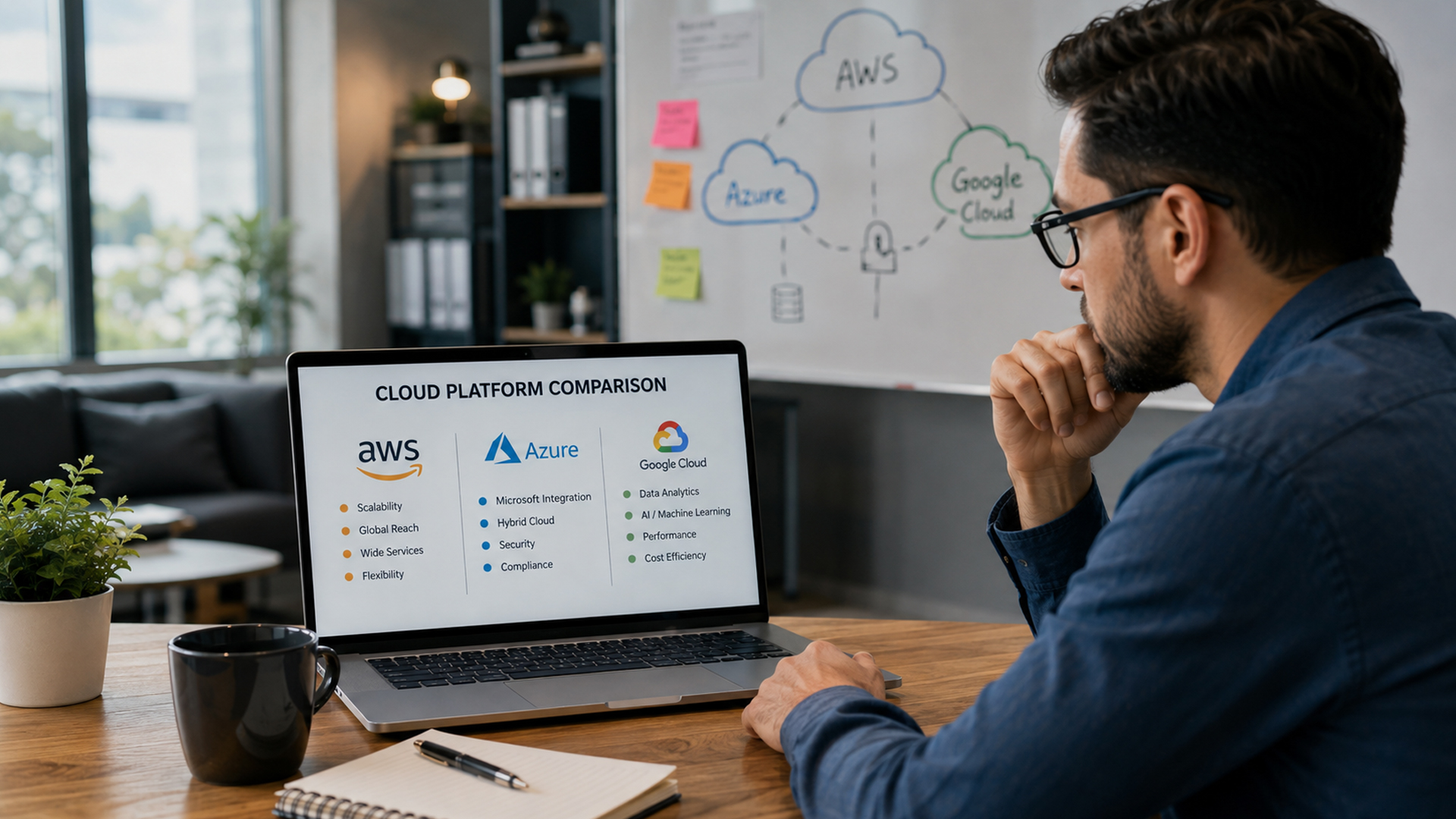
- Public cloud platforms like AWS, Azure, or Google Cloud
This setup allows businesses to move data and applications between environments depending on performance, security, and cost requirements.
It is also known as a mixed cloud environment or hybrid IT architecture.
Why Hybrid Cloud Matters in 2026
Hybrid cloud adoption is growing due to:
- Increasing cybersecurity threats
- Strict industry compliance requirements
- Growth of AI and data-heavy workloads
- Remote and distributed workforce models
- Need for business continuity and uptime
Many SMBs cannot rely on public cloud alone due to security or regulatory concerns.
Key Benefits of Hybrid Cloud
1. Enhanced Security Control
Sensitive data can remain in private infrastructure while less critical workloads run in the public cloud.
2. Greater Flexibility
Businesses can shift workloads based on demand and performance needs.
3. Cost Optimization
Use public cloud for scalable workloads and private systems for critical data to balance costs.
4. Business Continuity
Hybrid setups reduce downtime risks with backup and redundancy systems.
5. Compliance Support
Helps meet strict regulatory requirements in industries like healthcare and finance.
Hybrid Cloud Strategy for SMBs
A successful hybrid cloud strategy involves structured planning and execution:
Step 1: Assess Business Workloads
Identify which systems require security vs scalability.
Step 2: Classify Data Types
Separate sensitive data from general business data.
Step 3: Choose Cloud Providers
Select public cloud platforms and private infrastructure setup.
Step 4: Design Integration Architecture
Ensure seamless communication between environments.
Step 5: Implement Security Layers
Apply encryption, access controls, and monitoring tools.
Step 6: Monitor and Optimize
Continuously track performance and adjust resources.
Hybrid Cloud Architecture Overview
Hybrid cloud typically includes:
- Private cloud for sensitive workloads
- Public cloud for scalable applications
- Secure network connections between both environments
- Centralized management dashboard
- Backup and disaster recovery systems
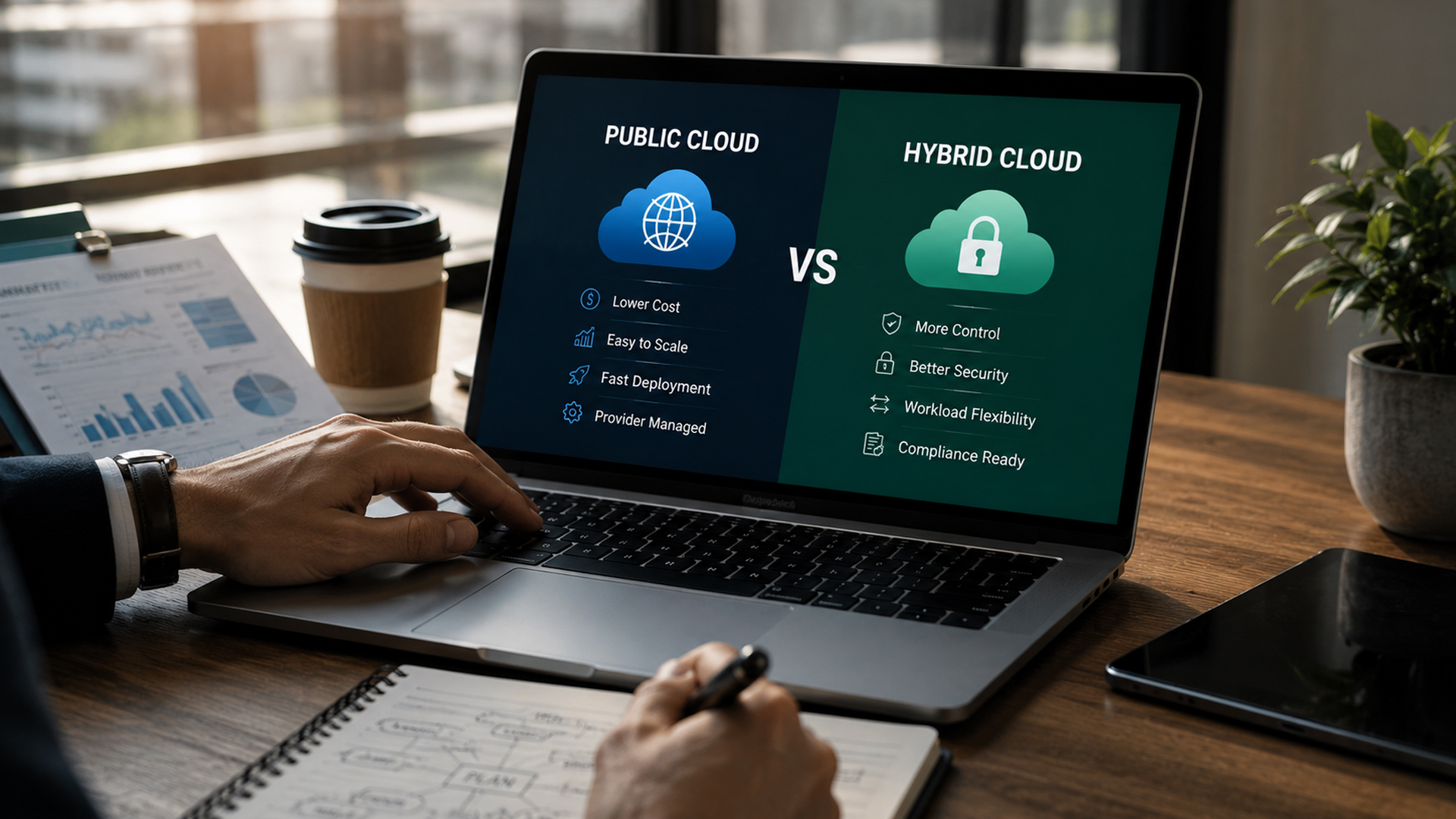
Hybrid Cloud vs Public Cloud (Strategic View)
Public Cloud:
- Lower cost
- Easier to manage
- Highly scalable
- Less control over data
Hybrid Cloud:
- More control over sensitive data
- Better compliance support
- More complex setup
- Higher long-term flexibility
Hybrid cloud is preferred for businesses with security or regulatory needs.
Hybrid Cloud Risk Factors
- Complex system management
- Integration challenges
- Higher setup costs
- Requires skilled IT expertise
- Potential misconfiguration risks
How MSPs Improve Hybrid Cloud Success
Managing hybrid environments internally can be difficult for SMBs.
Managed providers like IT Ninjas help by:
- Designing hybrid cloud architecture
- Managing integration between systems
- Monitoring performance across environments
- Strengthening security and compliance
- Optimizing cloud cost distribution
Industry Use Cases
- Healthcare – patient data security + cloud scalability
- Finance – compliance-heavy hybrid systems
- Retail – POS systems + cloud inventory management
- SaaS companies – hybrid deployment for apps and data
- Manufacturing – IoT + cloud analytics integration
- Legal firms – secure document storage + cloud access
Cost vs Value of Hybrid Cloud
Costs:
- Higher setup and integration investment
- Ongoing management complexity
- Skilled IT requirement
Value:
- Better security control
- Reduced risk of downtime
- Optimized long-term cloud spending
- Strong compliance alignment
Hybrid cloud is a long-term strategic investment, not just a cost decision.
Frequently Asked Questions
It is a mix of private servers and public cloud systems working together.
It depends on security, compliance, and workload needs.
To balance security, performance, and cost.
It has higher setup costs but offers better long-term value.
Conclusion
Hybrid cloud is one of the most powerful IT strategies for SMBs in 2026, offering the perfect balance between flexibility, scalability, and security.
While it is more complex than public cloud alone, it delivers stronger control and long-term efficiency for growing businesses.
With expert guidance from IT Ninjas, businesses can design and manage hybrid cloud environments that are secure, scalable, and future-ready.
Partnering with IT Ninjas ensures proactive cybersecurity, continuous monitoring, and strong defense against modern threats.